Skip to content

Psycho­pharmacology, made easy.

Clear, structured monographs for 79 psychiatric medicines: how they work, how to dose them, and what to watch for. Written for medical students, psychiatry trainees and clinicians.

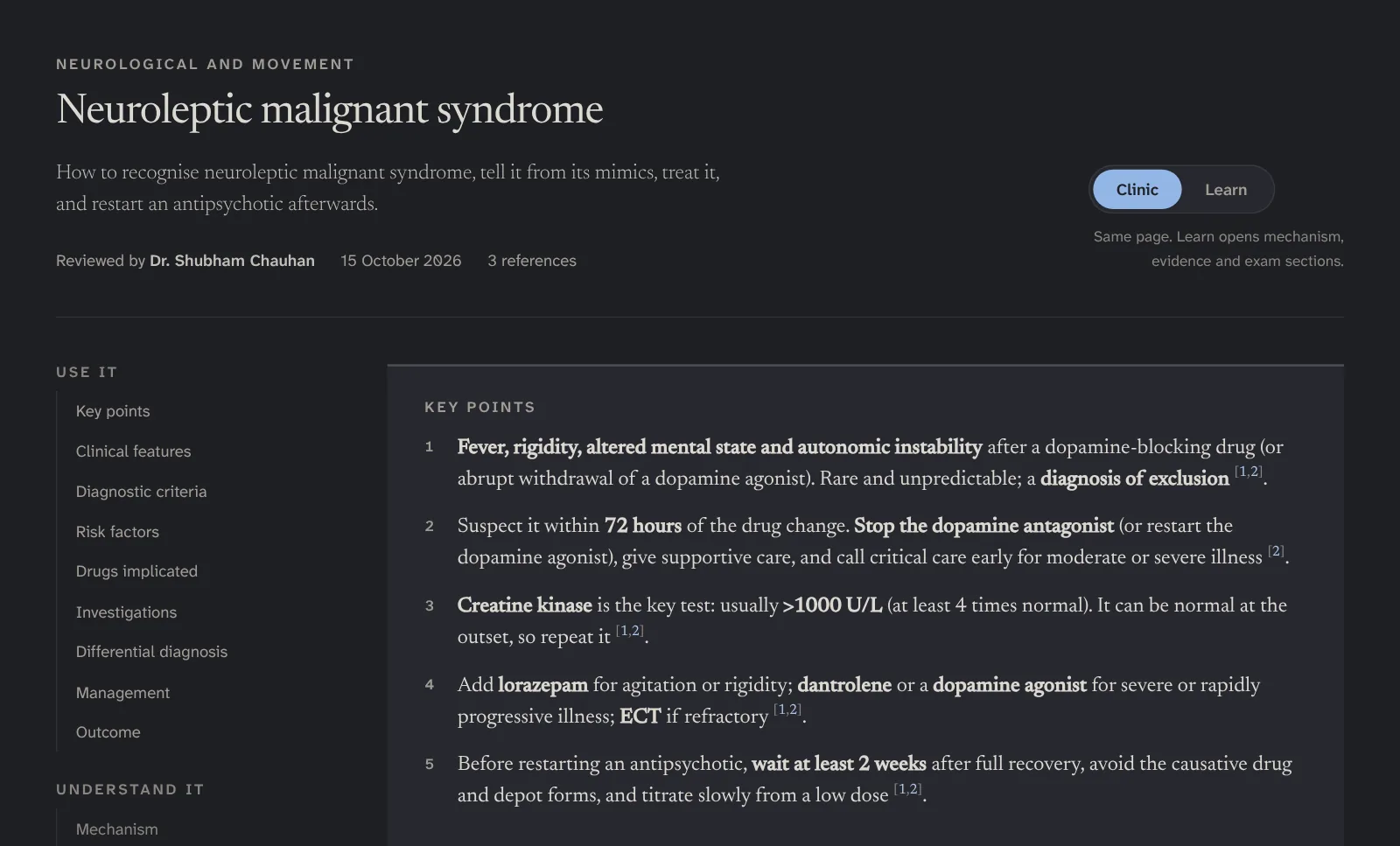
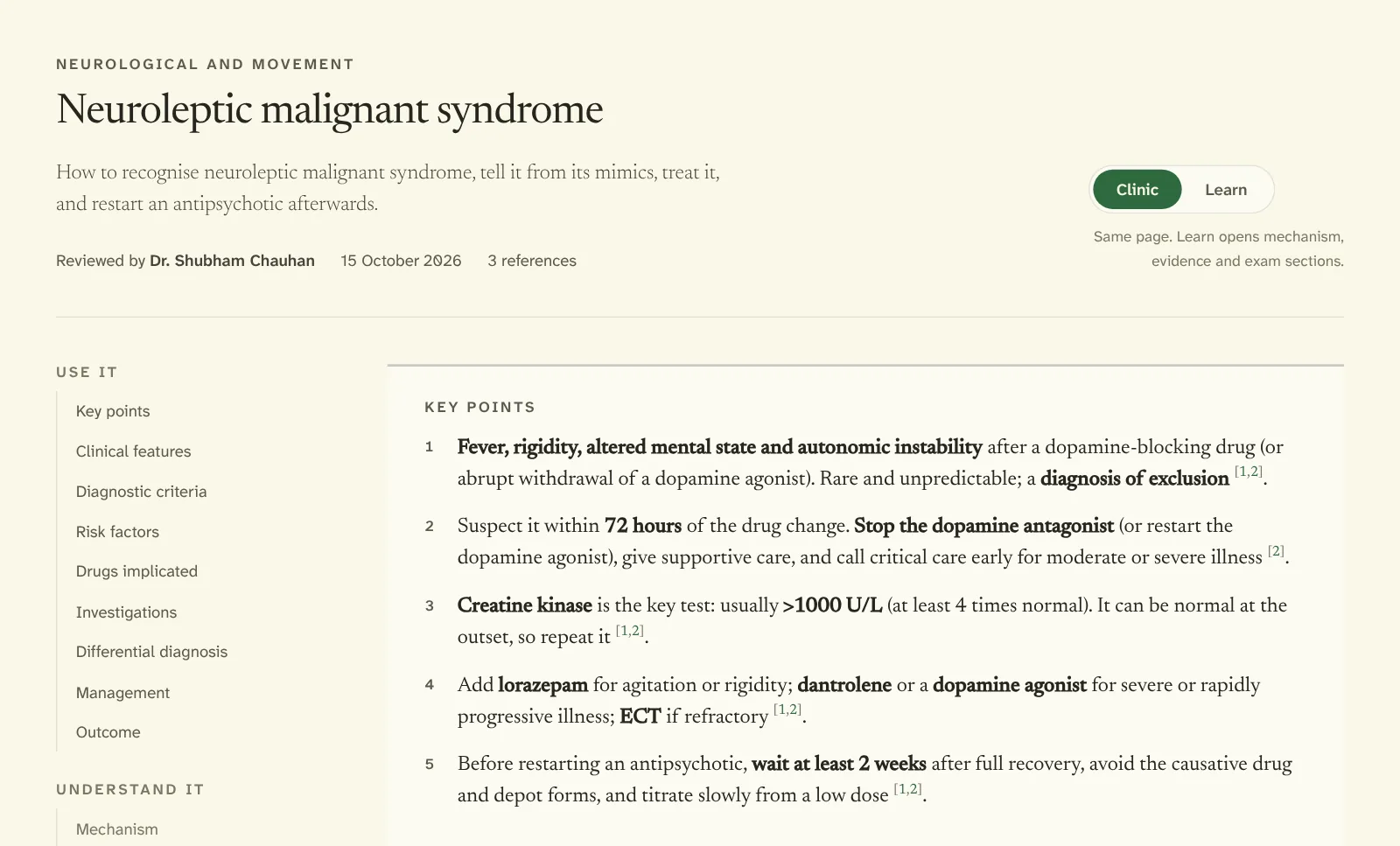
The neuroleptic malignant syndrome page: title, reviewer, reference count and numbered key points. The neuroleptic malignant syndrome page: title, reviewer, reference count and numbered key points.

Sources

The Maudsley Prescribing Guidelines in Psychiatry, Kaplan & Sadock's Comprehensive Textbook of Psychiatry, BMJ Best Practice, N Engl J Med and WHO ICD-11. Numbered references on every page.

Reviewed by Dr. Shubham Chauhan. No pharmaceutical funding.

New and updated

Every drug follows the same outline.

Learn where things live once, and the next drug takes seconds. Each monograph covers the same eleven sections in the same order, from classification to clinical notes.

Target and maximum doses sit at the top of every monograph, so the number you need most is never buried.

Example monograph

Sertraline

Antidepressants, selective serotonin reuptake inhibitor (SSRI)

Target dose
50–200 mg/day
Maximum dose
200 mg/day, usual maximum

Contents

  1. Classification
  2. Mechanism of action and receptor profile
  3. Pharmacodynamics
  4. FDA approved and off-label uses
  5. Pharmacokinetics and half-life
  6. Clinical dosing, optimization and target dose
  7. Side effects
  8. FDA black box warning
  9. Prescribing in special populations
  10. Drug interactions
  11. Miscellaneous

Take a slow breath.

Psychiatry asks a lot of the people who practise it. Breathe in as the ring grows, and out as it fades.

Breathing guide: breathe in for four seconds, then out for six.

A reference that stays out of your way.

Psychopharmacology is dense, and the detail you need is easy to lose between textbooks, guidelines and lecture notes.

Psychiatry Made Easy is a focused drug reference designed for fast scanning, comparison, and clinical study. Every medicine follows the same outline, so you can check a dose before a ward round or revise a receptor profile before an exam.

It is clinician-built and still growing, with new monographs and tools added over time.

One membership, everything inside.

Free tools

Open to everyone

  • QTc calculator
  • Alcohol withdrawal calculator
  • Psychiatric rating scales with scoring
  • Drug library browser and search

Questions

Is this medical advice?

No. Psychiatry Made Easy is an educational reference. Verify all drug information against current prescribing information, local protocols, and clinical judgment.

Who is it for?

Medical students, psychiatry trainees and clinicians who want quick, structured answers about psychiatric medicines.

What can I use without paying?

The calculators and the drug library browser are open to everyone. Full monographs, adverse-effects topics and Ask My Notes need a membership.

How does membership work?

Pay once online and you get 30 days of access. Paying again adds another 30 days. The price is shown when you subscribe.

Will more drugs be added?

Yes. New monographs are added over time, and the numbers on this page update as they are.